

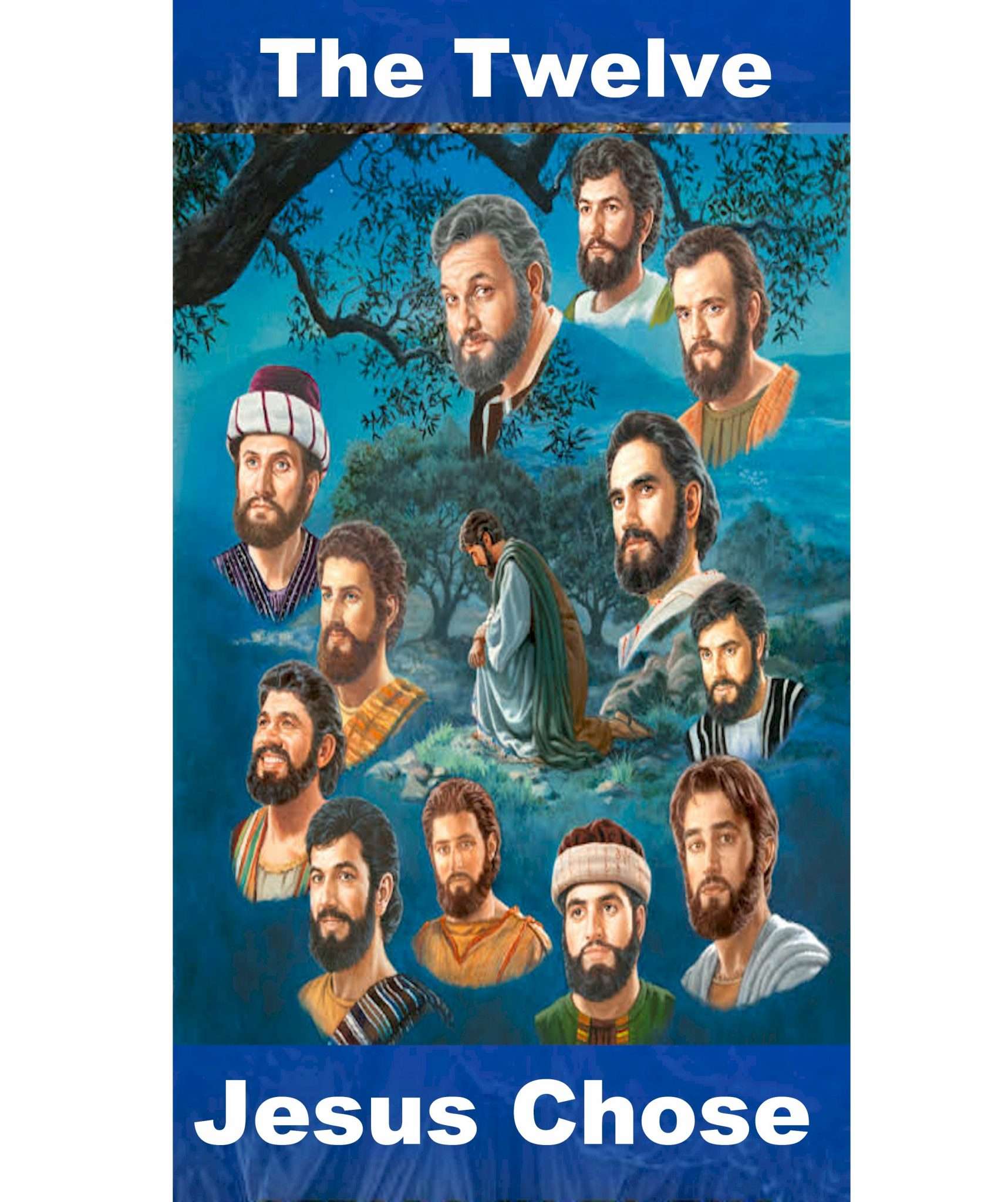
Why did Jesus choose these twelve men?
Surely there were better educated men in Israel. There were scribes who knew the Scriptures, priests who understood the ceremonies of the temple, and religious leaders who had spent their lives studying the Law. There were men of influence, wealth, dignity, and recognised ability. Yet after spending an entire night in prayer, Jesus did not choose from among the celebrated scholars of Jerusalem. He chose fishermen, a tax collector, a political zealot, and several men about whom history tells us almost nothing.
At first glance, they hardly seem an impressive group!
Some were “unschooled, ordinary men” (Acts 4:13). Peter was impulsive, outspoken, and often confident when he should have been listening. James and John could become so angry that they wanted fire to fall from heaven upon people who offended them. Thomas struggled with doubt. Philip tended to calculate what could be done before considering what God might do. Matthew had served the hated Roman system as a tax collector. Simon the Zealot had belonged to a movement passionately opposed to Rome. And Judas Iscariot would eventually betray the very Lord who had called him.
Yet these were the twelve Jesus chose.
Why?
Perhaps here we begin to understand something important about the ways of God. Jesus did not merely see these men as they were. He saw what they could become. Behind Peter's instability He saw a rock. Behind John's fiery temperament He saw the apostle who would write so beautifully about love. Behind Thomas' questioning spirit He saw the man who would eventually cry, “My Lord and my God!” Behind Matthew's compromised past He saw a servant who could leave everything and follow Him.
Jesus was not looking for finished products. He was looking for men who could be with Him, learn from Him, be corrected by Him, and finally be sent by Him.
That process was neither quick nor painless. The disciples brought with them deeply rooted ideas about religion, politics, authority, greatness, wealth, nationalism, and the coming kingdom. They often heard the words of Jesus through the filter of what they already believed. Again and again He had to overturn their assumptions and teach them another way. They wanted position; He taught servanthood. They expected domination; He demonstrated sacrifice. They looked for an earthly kingdom; He spoke of a kingdom that begins within the heart. They imagined a conquering Messiah; He walked deliberately toward a cross.
How patient Jesus was with them!
He corrected without quickly discarding. He exposed weakness without abandoning the weak. He allowed failure to reveal what was hidden in their hearts, and then used that very failure as part of their preparation. Peter could deny Him and still be restored. Thomas could doubt and still be brought to faith. James could possess misguided zeal and yet become a courageous witness. Again and again we see the same principle: the Lord works patiently with imperfect people until His purpose begins to appear in them.
That should encourage every believer.
Perhaps you see something of Peter in yourself — sincere love mixed with self-confidence. Perhaps you understand Thomas and his struggle to believe what he cannot prove. Perhaps you resemble Andrew, content to work quietly with individuals while others stand before the crowds. Perhaps, like Simon the Zealot, you have discovered that old loyalties and strongly held opinions must sometimes bow before the kingdom of God.
The twelve were very different men, and those differences must sometimes have made fellowship difficult. Yet Jesus placed them together. He was forming more than twelve individual disciples; He was preparing a people who would carry His gospel into the world.
This study, therefore, is more than a collection of biographies. It is an examination of character. We will look at these men as Scripture presents them — their strengths and weaknesses, their faith and unbelief, their ambitions, fears, prejudices, failures, and victories. At times we will use sanctified imagination to consider what may have been happening within them, but Scripture must remain our guide.
As we meet them one by one, perhaps the most important question will not be, “What kind of men were they?”
It will be:
“What can Jesus do with an ordinary person who is willing to follow Him?”
The answer is written across the pages of the New Testament.
Let us now meet the twelve Jesus chose.



Reviews
There are no reviews yet.