
Table of Contents
- Top Online Ministry Training Courses: Quick Comparison
- Vision Bible College: Flexible Self-Paced Ministry Study
- Accredited University Pathways for Ministry Credentials
- Vocational Ministry Qualifications and Certificates
- Are Online Ministry Degrees Respected by Churches?
- How Long Does It Take to Complete Ministry Training?
- Balancing Ministry Studies with Professional Work
- Choosing the Right Program for Your Ministry Goals
Last Updated: August 27, 2026
Top Online Ministry Training Courses: Quick Comparison
Finding the right online ministry training course means matching your circumstances, time availability, theological tradition, career aspirations, and accreditation needs to a program designed for exactly that.
The landscape has shifted dramatically. Ten years ago, few seminaries offered online delivery. Today, you can pursue anything from a self-paced certificate to a fully accredited doctorate without leaving your congregation. But that abundance creates a challenge: which programs will actually be respected by churches, employers, and your denomination?
This guide analyses leading providers across accreditation status, time commitment, theological flavour, and real-world applicability. Whether you’re a pastor juggling full-time work while studying, a lay leader wanting deeper biblical literacy, or planting a church and needing to equip your congregation, there’s a program here built for your reality.
Quick Picks:
- Best Overall Flexibility: Vision Bible College, self-paced study from anywhere with over 100 subjects and a no-commitment taster option
- Best Accredited University Pathway: University of Divinity, comprehensive degrees from certificate to doctorate with strong academic reputation
- Best Vocational Credentials: Malyon Vocational Training, nationally recognised qualifications under the Australian Qualifications Framework
- Best for Church Planting: Vision Bible College partnership programs, complete teaching materials and assessment support to launch your own Bible college
Vision Bible College: Flexible Self-Paced Ministry Study
Vision Bible College was built for the exact problem most ministry leaders face: you can’t pause your calling to study full-time. The platform offers self-paced learning across over 100 subjects, from foundational biblical studies through PhD-level research, at whatever pace fits your ministry schedule.
The strength is flexibility without compromise. Unlike correspondence-style platforms, Vision Bible College provides individual student support, feedback on assignments, and guidance when you’re stuck. For church planters, they offer partnership programs that supply everything a local congregation needs to establish its own Bible college: comprehensive teaching materials, assessment frameworks, and ongoing support. The taster option lets you trial courses before enrolling fully.
One caveat: their degree programs from Bachelor’s Completion through PhD are issued under US legislation and don’t hold Australian accreditation. This matters if you need formal credentials recognised by Australian employers or roles requiring TEQSA-accredited qualifications. For personal development, church leadership, or roles where experience matters more than credentials, this isn’t a barrier.
The 100+ subjects mean you can build a customised learning path focused on areas directly relevant to your ministry context, whether that’s expository preaching, church administration, discipleship, or hermeneutics.
Accredited University Pathways for Ministry Credentials
If you need credentials that carry institutional weight for employment, denominational endorsement, or academic advancement, university pathways deliver what self-paced platforms can’t: formal accreditation and degrees from established institutions.
Alphacrucis University College
Alphacrucis offers accredited qualifications from Certificate IV through Master’s degrees in Ministry, Theology, and Leadership, with a Pentecostal theological perspective. Study modes include online recorded, online live, mixed, or face-to-face. TEQSA and ASQA accreditation means FEE-HELP is available for eligible students, substantially reducing upfront costs. Short courses (ACx) offer a low-commitment entry point before committing to a full degree.
Per-subject fees accumulate across a degree, making total costs significant.
Church leaders and aspiring ministers seeking structured, accredited pathways with government funding eligibility and a Pentecostal theological framework.
Charles Sturt University School of Theology
Charles Sturt University delivers theology and ministry courses from undergraduate certificates through Master’s degrees, all available online or off-campus. You can specialise in Biblical languages, Christian ministry, Church history, Old and New Testament studies, Pastoral counselling, or Theology and Ethics. This matters if your ministry has specific needs, biblical languages become directly relevant if you’re planting a church in a non-English-speaking community.
Charles Sturt is a public university with university-level academic rigour and less practical "how to run a church" content than some vocational programs.
University of Divinity
The University of Divinity is Australia’s leading dedicated theological higher education provider, offering certificates through doctorates across Divinity, Ministry, and Theology. Courses are available in classroom, mixed, and online modes through affiliated colleges across Australia, providing diverse theological perspectives rather than a single denominational lens.
This is the heavyweight option for academic credibility. If you’re pursuing doctoral research, seeking a position in academic theology, or need universally recognised credentials, University of Divinity is the pathway. Affiliated colleges align with various theological traditions: Anglican, Catholic, Orthodox, Reformed, or Pentecostal.
University pathways deliver formal accreditation and institutional recognition. Choose this route if you need credentials for employment, academic advancement, or denominational endorsement. Choose self-paced platforms if you prioritise flexibility and affordability for personal ministry development.
Vocational Ministry Qualifications and Certificates
Vocational qualifications sit between self-paced platforms and university degrees. They’re nationally recognised under the Australian Qualifications Framework, meaning employers and churches understand exactly what they represent. They’re more structured than self-paced learning but more practical than university theology.
Malyon Vocational Training
Malyon offers Certificate III, Certificate IV, and Diploma of Christian Ministry and Theology, all accredited by ASQA and issued within the Australian Qualifications Framework. The curriculum is deliberately practical, focused on real ministry application rather than abstract theological theory.
Diploma students are required to have a mentor (typically a ministry leader) guiding their studies. This genuinely valuable relationship keeps you accountable, helps you apply learning to your actual ministry context, and provides one-to-one guidance that online platforms can’t replicate. Distance delivery means you can study from anywhere.
Ministry leaders in Queensland Baptist churches or those seeking nationally recognised vocational qualifications with strong emphasis on practical ministry application and mentorship.
Churches of Christ Victoria & Tasmania Activate Program
The Activate program is unaccredited online training designed specifically to meet theological requirements for ministerial endorsement within the Churches of Christ Victoria & Tasmania.
Four units, Bible, Theology, Mission, and Ministry, each contain nine sessions delivered as online video. For endorsement, you’ll also complete three 90-minute Zoom-based workshops per unit, blending self-paced flexibility with structured community engagement. Per-unit pricing at AUD $250 is straightforward and affordable. However, it’s not an accredited academic program, so it carries limited weight in broader employment contexts.
Are Online Ministry Degrees Respected by Churches?
The short answer: it depends entirely on accreditation status and the specific church or denomination.
Churches distinguish between three categories. First, TEQSA-accredited university degrees and ASQA-accredited vocational qualifications are universally respected because they’re formally recognised by the Australian government. A Master of Theology from University of Divinity or a Diploma from Malyon carries the same weight as any on-campus equivalent.
Second, degrees from recognised but non-Australian-accredited institutions like Vision Bible College’s international degrees carry weight based on institutional reputation, but it’s not automatic.
Third, unaccredited programs like Activate are respected within their specific denomination but carry limited weight outside that community.
If you’re pursuing ordination or seeking employment as a minister, check with your denomination or prospective employer about their requirements before enrolling.
Never assume an online degree will be automatically respected. Accreditation status determines recognition. Before enrolling, verify whether it meets your denomination’s requirements or your employer’s expectations.
How Long Does It Take to Complete Ministry Training?
The timeline depends entirely on your chosen program and how intensively you study.
Self-paced programs like Vision Bible College have no fixed timeline. A Certificate might take six months if studying intensively, or two years part-time. A degree could take two to five years depending on your pace.
Accredited university programs typically run on academic years. A Bachelor of Theology is usually three years full-time, or four to five years part-time. A Master’s degree is typically one to two years.
Vocational qualifications vary. Malyon’s Diploma typically takes one to two years. The Activate program can be completed in under a year if focused.
If you’re currently serving in a pastorate, you’re not studying full-time. A three-year degree becomes five years when fitting study around ministry responsibilities.
If you’re in active ministry, add 30-50% to any stated completion time. A “three-year degree” becomes a realistic four to five years when balancing it with pastoral responsibilities. Choose a program that won’t penalise you for studying at a sustainable pace.
Balancing Ministry Studies with Professional Work
Ministry is not a nine-to-five job. You’re on call for emergencies, preparing sermons, leading meetings, counselling congregants, and often working weekends. Adding formal study requires ruthless prioritisation.
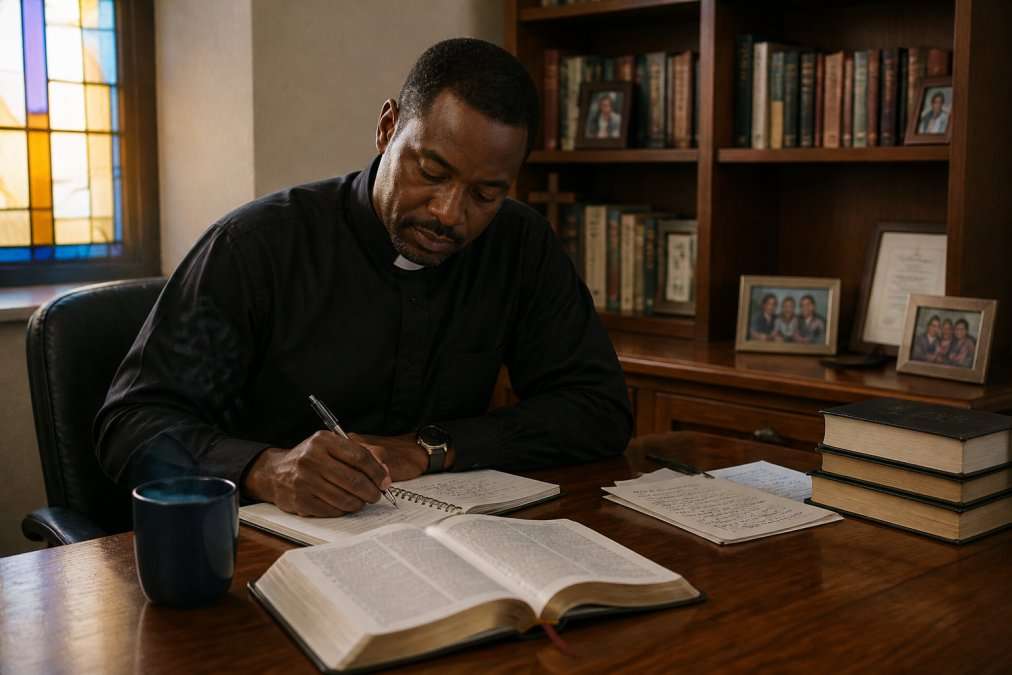
Self-paced programs work best because they don’t demand you show up at a specific time. If a congregant crisis happens during your scheduled study time, you can shift study to later. But self-paced also requires discipline, there’s no external deadline forcing completion.
Most successful minister-students treat study like a non-negotiable appointment. Wednesday evenings are study time, protected from other commitments. Early mornings before the congregation wakes up. A day off each week where study is the priority.
Consider also what you’re studying. If your degree focuses on areas directly applicable to your current role, pastoral care, church administration, expository preaching, you can integrate learning into your ministry immediately. That integration makes the time investment feel less like additional burden and more like professional development.
Completing formal ministry training while actively serving is harder than doing it full-time. It takes longer and requires genuine commitment. But thousands of ministers have done it, and most report that studying while serving actually deepens their learning because they’re immediately applying what they’re learning to real ministry challenges.
Choosing the Right Program for Your Ministry Goals

Choosing between these options comes down to answering five questions honestly.
First: Do you need formal accreditation? If you’re pursuing ordination, seeking employment as a minister, or need credentials recognised by your denomination, accreditation is non-negotiable. University of Divinity, Alphacrucis, Charles Sturt, and Malyon all meet this requirement. Vision Bible College’s international degrees and the Activate program don’t.
Second: How much flexibility do you genuinely need? Self-paced programs offer maximum flexibility but require maximum self-discipline. University programs offer less flexibility but provide structure. Be honest about which you’ll actually stick with.
Third: What’s your theological tradition? Alphacrucis leans Pentecostal. University of Divinity offers multiple traditions through affiliated colleges. Charles Sturt is theologically comprehensive. Vision Bible College is non-denominational with Pentecostal flavour. The Activate program is specifically Churches of Christ.
Fourth: What’s your budget? University programs cost AUD $2,300-$20,000+ per year. Alphacrucis is mid-range. Malyon’s Diploma is around AUD $4,260. Vision Bible College is generally affordable. The Activate program is AUD $250 per unit.
Fifth: What’s your actual goal? Are you seeking academic credentials for advancement? Practical skills for your current role? Theological depth for personal growth? Denominational endorsement? The right program for each goal is different.
Vision Bible College serves ministers who prioritise flexibility, affordability, and practical application without requiring formal accreditation. For ministers needing accredited credentials, university pathways deliver academic weight and recognition. For those wanting vocational qualifications with mentorship, Malyon is the strongest option.
The worst choice is picking a program based on what sounds impressive rather than what matches your actual circumstances. The best choice is the one you’ll actually complete.
| Program | Accreditation | Study Mode | Best For | Time Commitment |
|---|---|---|---|---|
| Vision Bible College | International (not TEQSA) | Fully self-paced | Flexibility + affordability | 2-5 years (variable) |
| Alphacrucis University College | TEQSA/ASQA | Online + blended | Accredited study + FEE-HELP | 3-4 years (part-time) |
| Charles Sturt University | TEQSA | Online + off-campus | University-level theology | 3-5 years (part-time) |
| University of Divinity | TEQSA | Online + mixed | Academic rigour + diverse traditions | 3-5 years (part-time) |
| Malyon Vocational Training | ASQA (AQF) | Distance + face-to-face | Practical credentials + mentorship | 1-2 years |
| Churches of Christ Activate | Unaccredited | Online video + workshops | Denominational endorsement | 6-12 months |
The choice between these best online ministry training courses isn’t about which is objectively "best", it’s about which aligns with your constraints, your goals, and your honest assessment of how you work. A self-paced program is only better if you’ll actually complete it. An accredited degree is only necessary if accreditation matters for your next step. A structured program is only helpful if you’ll engage with the structure rather than resent it.
Most successful minister-students pick based on a clear-eyed answer to: "Given my current role, my schedule, my theological tradition, and my goals, which program will I actually complete and benefit from?" That clarity matters far more than which program has the fanciest website.
Ready to explore flexible, affordable ministry training designed for active pastors and church leaders? Vision Bible College offers self-paced study across over 100 subjects, individual student support, and a taster option so you can try before committing. Plus, if you’re establishing a Bible college in your congregation, our partnership programs provide comprehensive teaching materials and assessment support. Request your information pack to discover how to study at your pace, from your place.
Frequently Asked Questions
Are online ministry degrees respected by churches?
Yes, accredited online ministry degrees from established institutions are widely respected by churches. Degrees from accredited providers like the University of Divinity, Alphacrucis University College, and Charles Sturt University hold the same standing as on-campus qualifications. Church hiring committees recognise TEQSA and ASQA accreditation as marks of rigorous theological education. However, degrees from unaccredited providers may not carry the same weight, so verify accreditation status when choosing your online ministry training course.
How long does it take to complete ministry training?
Completion time varies widely depending on the program type and your pace. Certificate programs typically take 6-12 months of study. Bachelor's degrees generally require 2-3 years full-time or 3-4 years part-time. Master's degrees range from 1-2 years. Self-paced online programs offer flexibility, allowing you to progress faster if you can dedicate more hours weekly, or slower if balancing active ministry. Vision Bible College and similar providers emphasise flexible timelines so you study at your own pace without rigid deadlines.
Can I balance online ministry training with full-time work?
Yes. Most online ministry training courses are specifically designed for working pastors, ministers, and church leaders. Self-paced programs let you study around your schedule, often requiring 10-15 hours per week for part-time engagement. Some institutions offer hybrid models combining recorded lectures with occasional live sessions, giving you control over when you engage. The key is choosing a provider that emphasises flexibility and individual support, Vision Bible College's model and similar self-paced offerings cater directly to those balancing ministry studies with professional work and family commitments.
What's the difference between accredited and non-accredited ministry programs?
Accredited programs are formally recognised by government bodies (TEQSA or ASQA in Australia) and meet rigorous academic standards. These qualifications are portable across denominations and recognised in employment contexts. Non-accredited programs, such as church-specific or denominational training, may offer valuable practical ministry formation but don't carry formal government recognition. Accredited vocational qualifications (Certificate III-IV, Diplomas) follow the Australian Qualifications Framework and are nationally recognised. Choose accreditation based on your goals: formal credentials require accreditation; personal spiritual formation may not.
Are there free online ministry training options available?
Most formal accredited online ministry training courses require tuition, though some institutions offer free introductory modules or taster options. Vision Bible College provides a 'Taster Option' for no-commitment trial. Some denominations and churches offer free or low-cost internal training programs. However, free options are typically unaccredited and limited in scope. If you're seeking a recognised qualification, certificate, diploma, or degree, expect to invest in tuition. Accredited programs ensure academic rigour and portability that free alternatives generally cannot provide.
This article was written using GrandRanker