
Table of Contents
- Why Practical Ministry Belongs in Every Theological Curriculum
- A Step-by-Step Curriculum Integration Framework
- Supervised Ministry Placement for Theology Students
- The Church-Based Theological Training Model in Practice
- Reflective Practice in Ministry Training
- Assessment of Ministerial Competencies
- Adapting Practical Ministry Integration for Different Institutions
- Conclusion: Building Ministers, Not Just Graduates
- Frequently Asked Questions
Last Updated: October 13, 2026
Why Practical Ministry Belongs in Every Theological Curriculum
Practical ministry is the supervised, reflective work of serving a real congregation while you study, and integrating practical ministry into theological education means treating that work as core coursework rather than an optional extra.
The gap shows up fast. A graduate can explain the doctrine of grace in an exam but freeze when a family asks them to pray at a hospital bedside.
So why does integration matter?
- It closes the gap between academic theology and real church life.
- It builds ministerial identity, not just a transcript.
- It gives students supervised practice before the stakes are high.
Theological education that ignores the ministry setting produces graduates who are learned but unready.
The goal is not to add more subjects. It is to make the ministry setting itself a classroom, with real feedback and real reflection.
A Step-by-Step Curriculum Integration Framework
A workable integration framework moves through five stages, and most colleges skip at least two.
- Define graduate outcomes. Write down what a minister should be able to do, not just know.
- Map outcomes to ministry settings. Match each skill to a real context: preaching, pastoral care, youth ministry, community engagement.
- Sequence theory and practice. Teach the concept, then place the student where they use it.
- Add supervision and reflection. Every placement needs a mentor and a written reflection loop.
- Assess and adjust. Review competency evidence each term and revise the curriculum.
The framework works because it treats theory and practice as partners. Academic learning feeds the placement. The placement tests the learning.
Mapping Learning Outcomes to Ministry Settings
Start with a simple grid. List your outcomes down one side. List your ministry settings across the top. Then mark where each outcome gets tested.
| Learning Outcome | Preaching | Pastoral Care | Youth Ministry | Community Engagement |
|---|---|---|---|---|
| Biblical knowledge | Sermon prep | Scripture in crisis | Teaching series | Public reading |
| Pastoral skills | Altar calls | Home visits | Mentoring teens | Welcome teams |
| Leadership development | Service planning | Team care | Volunteer rota | Event running |
| Theological reflection | Sermon review | Case notes | Debrief sessions | Project reports |
This table does two jobs. It shows students where they will grow. It shows staff where the curriculum has holes.
Sequencing Theory and Practice Across the Program
Sequencing matters more than most guides admit. Front-loading all the theory and saving placements for the final year means students forget the theory before they use it.
A better pattern alternates the two:
- Year one: Foundations plus a light observation placement.
- Year two: Doctrine and biblical studies plus a supervised serving role.
- Year three: Leadership subjects plus a lead role with a mentor.
Each block builds on the last. The student never learns in a vacuum.
Supervised Ministry Placement for Theology Students
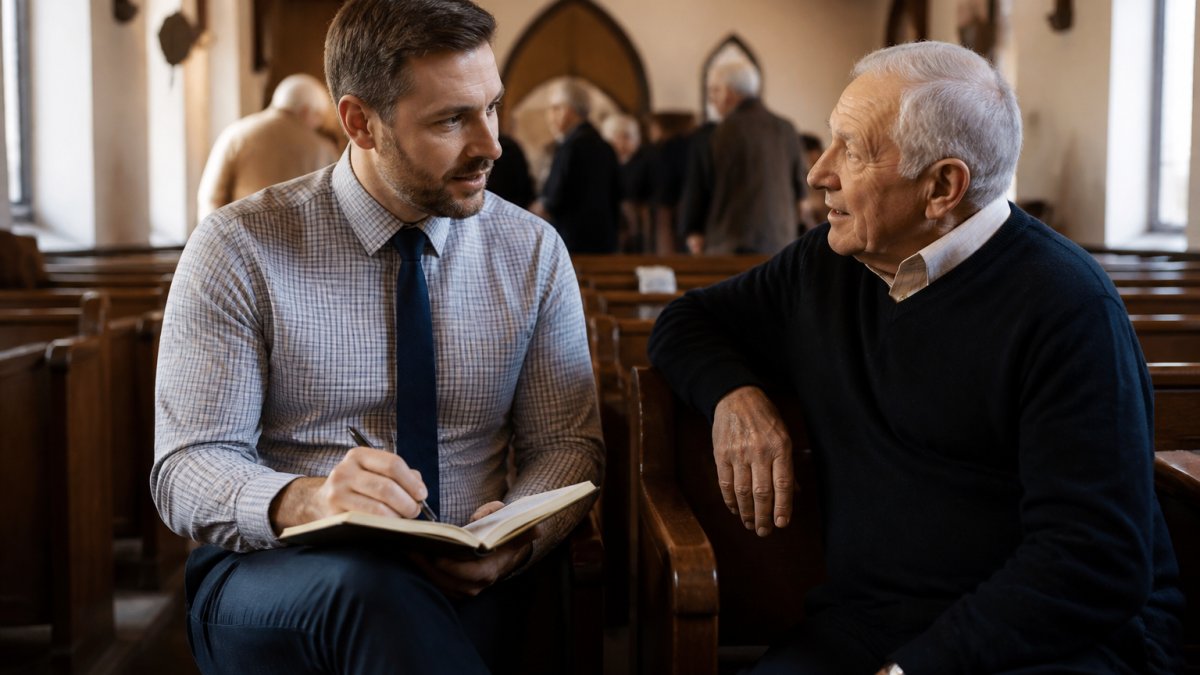
Supervised ministry placement for theology students is a structured, mentored role in a real church or ministry setting where an experienced leader guides the student and reviews their work.
What makes a placement work:
- A named supervisor who meets the student weekly.
- Clear tasks tied to the student’s learning outcomes.
- A written reflection log the student keeps.
The supervisor is the difference between a placement and a job. The best ones ask questions rather than give answers: they let the student lead, then unpack what happened.
The biggest mistake is placing a student with no mentor and calling it field education. Without supervision, students repeat their own habits instead of forming new ones.
The Church-Based Theological Training Model in Practice
The church-based theological training model delivers accredited study through the local congregation, using the church itself as the learning site. The college owns the curriculum, moderation, and awards; the congregation owns the ministry setting, the mentor, and day-to-day discipleship. It suits leaders who want to raise up ministers from within their community rather than send them away.
How it runs in practice:
- The church provides the ministry setting, a named mentor, and a placement supervisor.
- The college provides the curriculum, assessment tools, moderation, and the award.
- Students study while they serve, often at their own pace and around existing ministry loads.
What the College Must Carry
A congregation rarely has the curriculum, assessment instruments, or moderation processes on its own. The college partner supplies:
- Unit outlines mapped to graduate outcomes.
- Assessment rubrics and marking guides.
- Moderation and appeals processes.
Without those, the model drifts into informal apprenticeship and the award loses credibility.
What the Church Must Carry
- A mentor with ministry experience and the time to meet weekly.
- A placement supervisor separate from the mentor where possible, so feedback is not self-assessed.
- A safe ministry framework, including working-with-children checks where the placement involves minors.
Supervision Ratios and Mentor Load
A common pattern is one mentor to one or two students. Beyond that, the weekly debrief collapses into a group session and individual reflection suffers. Where a church has several students, appoint a placement coordinator who liaises with the college.
A Worked Example
A rural congregation of about 80 people wants to raise up a bi-vocational pastor. The college enrols the student in a diploma, supplies unit outlines and rubrics, and trains the existing lay leader as mentor. The student preaches monthly, leads a small group, and visits shut-ins, logging each event against the outcomes grid. The mentor meets weekly; the college moderator reviews the portfolio each term.
Trade-Offs to Name Honestly
- Depth versus access. Church-based study widens access but can narrow the peer cohort, so online cohorts and residential intensives matter.
- Mentor quality. A willing mentor is not automatically a skilled one; mentor training is not optional.
- Assessment integrity. The college must moderate, or grades become a local opinion.
This model fits rural and remote congregations well, and helps churches that cannot send people away to study. The key is partnership: the congregation leads the ministry, the college carries the academic load.
A church-based model is only as strong as its weakest link. If the mentor is untrained or the moderation is absent, the award means little and the student is short-changed.
Reflective Practice in Ministry Training
Reflective practice in ministry training is the habit of reviewing your own ministry work, in writing and with others, to turn experience into learning, where ministry experience becomes ministry wisdom.
Theological reflection asks three plain questions:
- What happened in this situation?
- What does Scripture and theology say about it?
- What will I do differently next time?
Done well, reflective practice connects academic theology to the mess of real pastoral work and protects students from burnout by giving them a place to process hard moments.
Tools for Structured Theological Reflection
Simple tools beat complicated ones. Try these:
- The three-question log. Answer the three questions above after each ministry event.
- The critical incident report. Pick one moment, describe it, and analyse it theologically.
- The peer reflection group. Meet monthly and share one case each.
Each tool takes minutes, not hours. The point is consistency, not volume.
Assessment of Ministerial Competencies
Assessment of ministerial competencies measures what a student can actually do in ministry, not just what they can recall. It uses evidence from real settings, judged against published standards and moderated so one supervisor’s generosity cannot inflate a grade. Most guides stop at naming the methods; the gap is the rubric and feedback loop that make them trustworthy.
Start With Observable Outcomes
Write outcomes as observable behaviours, not dispositions. “Demonstrates pastoral sensitivity” cannot be marked. “Visits a congregation member in hospital, prays with them, and writes a case note within 48 hours” can.
A workable outcome set covers four domains:
- Biblical and theological knowledge applied to a real situation.
- Pastoral skills such as listening, prayer, and referral.
- Leadership readiness such as planning, delegation, and conflict handling.
A Simple Rubric
Use a four-level scale across each domain. The wording matters more than the number.
| Level | Descriptor |
|---|---|
| Not yet competent | Needs direct instruction and close supervision to attempt the task. |
| Developing | Performs the task with prompting and reviews the outcome only when asked. |
| Competent | Performs the task independently, reflects on it, and adjusts next time. |
| Proficient | Performs the task independently, reflects deeply, and helps others learn from it. |
Apply the rubric to each piece of evidence, not the student as a whole. A student may be proficient in preaching and developing in pastoral care; the record should show that.
Evidence Sources
- Direct observation. A supervisor watches the student preach, lead, or counsel, and completes the rubric on the spot.
- Portfolios. Sermons, case notes, service plans, and reflections, indexed against outcomes.
- Reflective essays. The student explains their choices, the theology behind them, and what they would change.
The Feedback Loop
Assessment only changes behaviour if feedback arrives in time to act on it. A common pattern:
- Supervisor observes and marks against the rubric.
- Student writes a short reflection within a week.
- Mentor and student meet to agree one or two specific changes.
- The next observation checks whether those changes happened.
Without step four, the loop is open and the student repeats the same habits.
Moderation and Integrity
Where multiple supervisors mark, the college must moderate a sample of portfolios each term. This catches grade drift, protects students, and keeps the award defensible under external review.
What to Avoid
- A single exam standing in for ministry competence.
- Grading attendance rather than practice.
- Letting the congregation’s affection for a student substitute for evidence.
Assess the reflection, not just the performance. A student who preaches well but cannot explain their choices has not yet learned to think like a minister.
Reporting to the Student and the Church
Give the student a plain-language summary each term: what they can now do independently, what still needs supervision, and what the next placement should target. With the student’s consent, share it with the sending church so the congregation can shape the next season of ministry rather than guess at it.
Adapting Practical Ministry Integration for Different Institutions
No two institutions can run the same model, and pretending otherwise causes most integration plans to fail. A large seminary and a small rural church need different structures.
Match the model to your context:
- Large institutions: dedicated placement offices and formal supervision contracts.
- Small colleges: partner with local churches for settings and mentors.
- Rural and remote settings: online study plus a local mentor, with flexible timing.
The common thread is supervision and reflection. The delivery changes. The core does not.
For students juggling a full-time pastorate, a family, and study, flexibility is the difference between finishing and dropping out.
Conclusion: Building Ministers, Not Just Graduates
Too many theological programs still graduate people who know the Bible but have never been tested in the pulpit, the hospital room, or the difficult meeting.
Integrating practical ministry into theological education fixes that. It builds ministers, not just graduates.
Request Information Pack from Vision Bible College and start building the minister, not just the degree.
Frequently Asked Questions
What does practical ministry mean in theological education?
Practical ministry is the supervised, hands-on side of theological training: preaching, pastoral care, discipleship, leading teams and serving a local congregation while you study. It sits alongside academic theology and biblical knowledge rather than replacing them. The aim is to close the gap between what you learn in a classroom and what happens in a real ministry setting, so that graduates arrive at a church already familiar with the demands of pastoral practice and church leadership.
How can local churches partner with a theological college to train ministers?
A church-based theological training model works best when the congregation supplies the ministry setting and the college supplies the curriculum, teaching materials and assessment support. The church identifies real ministry roles, such as youth ministry, pastoral care or small-group leadership, and a supervisor mentors the student week to week. The college then moderates the placement, reviews reflective journals and confirms that assessment of ministerial competencies meets the same standard as on-campus study.
How should practical ministry placements be assessed?
Assessment of ministerial competencies usually combines several sources: supervisor reports from the placement, a portfolio of work such as sermons or lesson plans, reflective journals, and a review conversation with a college mentor. Clear rubrics matter, because they tell the student what good pastoral practice looks like and protect against a placement that becomes unpaid admin work. Assessment should measure growth over time, not just a single performance, and should feed back into the student’s ongoing ministerial formation.
What challenges arise when integrating theory and practice in ministerial education?
The common friction points are time, supervision and consistency. Students already serving in ministry can struggle to fit supervised ministry placement for theology students around a full schedule, rural or isolated students may have few local supervisors, and churches vary in how well they mentor. Reflective practice in ministry training helps here, because written reflection turns raw ministry experience into learning. Colleges that plan placements early, train supervisors and keep assessment criteria simple tend to see fewer of these problems.