
Table of Contents
- Understanding Online Bible College Curriculum Support
- Course Catalog and Curriculum Overview
- Self-Paced Learning Options and Flexible Study Schedules
- Accreditation and Academic Recognition
- Online Theological Education Assessment Tools
- How to Start a Bible College in Your Church
- Bible College Teaching Materials for Pastors
- Student Support Services and Learning Management Systems
Understanding Online Bible College Curriculum Support
Online bible college curriculum support is the comprehensive framework of academic resources, learning management systems, and student guidance services that enable theological education to be delivered effectively through digital platforms. This support encompasses everything from course design and delivery tools to mentorship structures that help students navigate their studies whilst managing active ministry responsibilities.
The challenge for many ministry leaders isn’t accessing theological content anymore, it’s finding a structured, credible pathway that fits their life. A pastor juggling a full congregation, a family, and personal growth needs curriculum support that’s genuinely flexible, not just theoretically self-paced. This is where purposeful online bible college curriculum support becomes essential.
At Vision Bible College, we’ve designed our approach around this reality. Our online theological education assessment tools and comprehensive curriculum materials support both individual learners and church leaders launching their own Bible colleges. The distinction matters: curriculum support isn’t just course content delivered online. It’s the entire ecosystem that makes self-paced theological education actually work.
The most successful online Bible college students aren’t the ones with the most free time, they’re the ones with clear support structures that keep them accountable and connected to their learning community.
Course Catalog and Curriculum Overview
A strong course catalog forms the foundation of effective bible college curriculum support. When you’re choosing an online theological education program, the breadth and depth of available subjects directly shape what you can study and how far you can advance in your theological development.
Vision Bible College offers over 100 subjects across multiple study streams, ranging from foundational biblical studies and hermeneutics to advanced pastoral care and chaplaincy certification. This breadth means you’re not locked into a narrow path. You can explore biblical exegesis, Christian theology, and ministry-specific training all within a single institutional framework.
The curriculum is structured to provide academic rigor without sacrificing accessibility. Each course includes clear learning outcomes, detailed syllabi, and assessment mechanisms that ensure you’re not just consuming content, you’re demonstrating genuine competency in theological concepts. This structure matters when you eventually present your credentials to churches, denominations, or other ministry contexts.
What distinguishes a strong curriculum overview is transparency about how courses connect to real ministry outcomes. Rather than presenting subjects in isolation, effective online theological education programs show how biblical literacy, hermeneutics, and pastoral care integrate into a coherent theological education pathway. You should understand not just what you’re studying, but why each component matters for your specific ministry calling.
A course catalog that offers flexibility without sacrificing academic coherence is the hallmark of credible [online bible college](/online-bible-college-for-busy-pastors-study-at-your-pace/) curriculum support.
Self-Paced Learning Options and Flexible Study Schedules
The fundamental appeal of online theological education is self-paced learning, but the execution determines whether this flexibility actually works for busy ministry leaders. Self-paced doesn’t mean unsupported or unstructured. It means you control when you engage with material, not that you’re entirely on your own.

Effective flexible study schedules allow you to progress through coursework according to your capacity in any given week (peer-reviewed research). If your church experiences a crisis that demands your full attention, you’re not penalised for pausing. If you have a lighter week and can accelerate, the system accommodates that too. This asynchronous learning model is what makes theological education genuinely accessible for those serving active ministries.
The key distinction is between available flexibility and supported flexibility. Many online programs offer self-paced access to materials but provide minimal guidance on realistic timelines or how to maintain momentum. Vision Bible College‘s approach includes individual student support, with people who help you plan a study schedule that fits your life, not a generic timeline that assumes everyone has identical capacity.
Realistic completion timelines matter more than many students expect. If you’re told a degree programme takes "two to three years" without context about study hours per week, you’re working with incomplete information. Supported flexibility includes honest conversations about what completion actually requires and how to sequence your coursework so you’re not overwhelmed.
The biggest mistake with self-paced learning is treating it as unsupervised ([peer-reviewed research](https://pmc.ncbi.nlm.nih.gov/articles/PMC7359165/)). Without clear milestones and regular check-ins, many students lose momentum after the first term.
Accreditation and Academic Recognition
Accreditation is where many online theological education programs falter, and it’s where you need absolute clarity before committing. A degree or certificate that carries no institutional weight in ministry contexts is essentially personal enrichment, which has value, but it’s not the same as a credential that advances your leadership.
Vision Bible College holds charter membership in the Apostolic Council for Educational Accountability (ACEA), which provides the institutional legitimacy that churches and denominations recognise. This accreditation means your studies meet established standards for theological rigour and academic quality. It’s the difference between a certificate that looks professional and one that actually opens doors.
The accreditation question often surfaces when you’re considering whether to study with a larger, more established institution versus a smaller, more affordable provider. The tension is real: you might find cheaper options, but accreditation and recognition are not negotiable if you’re studying to advance in ministry leadership. A credential that churches don’t recognise wastes both your time and money.
When evaluating any online theological education program, ask directly: Which denominations and church networks recognise this credential? Can you speak to graduates who’ve used this qualification to advance in ministry? What does accreditation actually mean for employment or leadership opportunities? These questions separate credible programs from those that simply sell courses.
Online Theological Education Assessment Tools
Assessment is often the overlooked component of online bible college curriculum support, yet it’s what determines whether you’ve actually learned the material or just consumed it. Effective theological education requires rigorous assessment that measures genuine comprehension, not just course completion.
Online theological education assessment tools should include multiple formats: essays that demonstrate your ability to engage with biblical texts and theological concepts, practical assignments that show how you’d apply learning in a ministry context, and discussions that deepen your understanding through engagement with peers and faculty. A program that relies solely on multiple-choice quizzes is prioritising convenience over learning.
The assessment framework also shapes what you retain. When you know you’ll be asked to write a theological reflection on hermeneutics principles and apply them to a pastoral scenario, you study differently than if you’re simply answering factual questions. Assessment design influences the depth of your learning.
Vision Bible College’s assessment approach includes feedback mechanisms that help you understand not just whether you’re correct, but why. This feedback loop is crucial in theological education, where nuance and context often matter as much as factual knowledge. staying accountable to studies.
Serious ministry leaders who want credentials that genuinely represent their theological competency and are recognised by churches and denominational networks.
How to Start a Bible College in Your Church
Many church leaders ask whether they can establish their own Bible college using external curriculum and assessment support. This is genuinely possible, and it’s one of the most direct ways to equip your congregation with biblical knowledge and ministry skills.
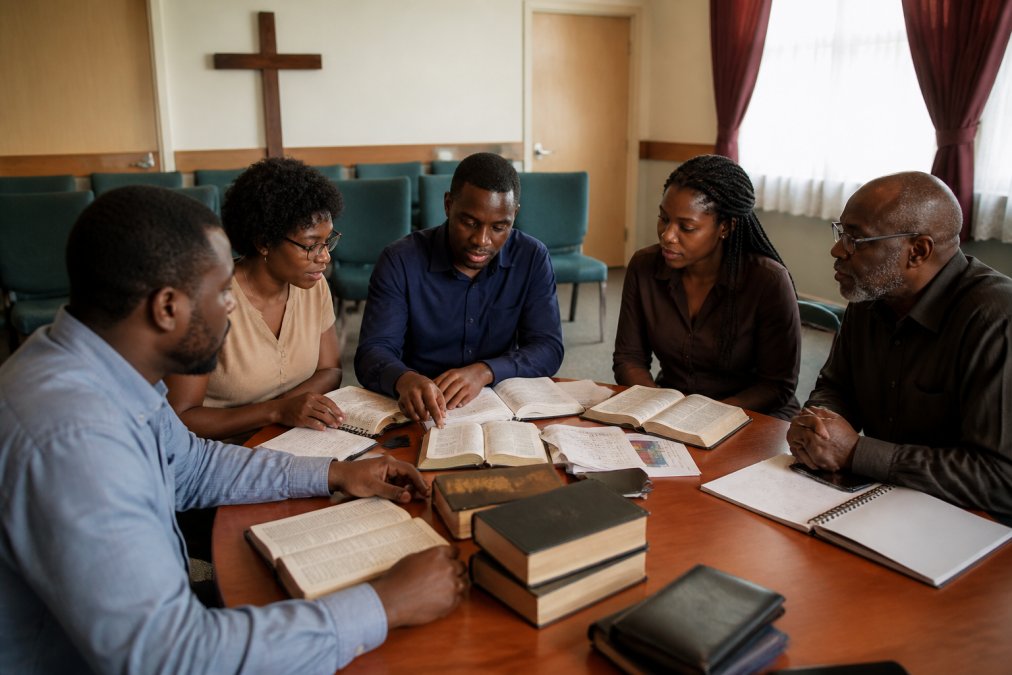
Starting a Bible college in your church requires several foundational elements. First, you need clarity about your purpose: Are you offering this primarily for leadership development within your congregation, or are you creating a pathway for people to pursue formal theological credentials? This distinction shapes everything from curriculum selection to assessment requirements.
Second, you need curriculum materials and teaching resources that are comprehensive enough to sustain a program over time. This is where many church-based initiatives struggle, they begin with enthusiasm but lack the structured course content and assessment frameworks necessary for genuine theological education. Vision Bible College partners with churches by providing both curriculum materials and ongoing assessment support, which removes the barrier of having to develop everything from scratch.
Third, you need to establish realistic expectations about faculty capacity. If you’re relying on volunteer pastors and leaders to teach everything, you’ll quickly encounter burnout and inconsistency. Hybrid models work better: use external curriculum and assessment support to handle the heavy lifting of course design and evaluation, whilst your local leaders facilitate discussions and provide pastoral mentorship.
The practical pathway typically involves identifying 3-5 core subjects to launch with, recruiting 2-3 local facilitators who can guide discussions and provide accountability, and establishing a clear schedule that your congregation can commit to. Many churches find that starting with a certificate programme (12-18 months) builds momentum before expanding to degree-level work.
Bible College Teaching Materials for Pastors
Teaching materials are the backbone of any theological education delivery, whether you’re teaching in a traditional classroom or facilitating online discussions. For pastors and church leaders launching their own Bible colleges, having access to comprehensive, well-designed teaching materials is non-negotiable.
Effective teaching materials for theological education include detailed course syllabi that outline learning outcomes, weekly reading assignments that engage students with primary theological texts and secondary commentary, discussion prompts that deepen understanding beyond surface-level comprehension, and assessment rubrics that clarify what constitutes excellent work. Materials that lack this structure force teachers to create everything themselves, which is unsustainable for volunteer-led programs.
The best teaching materials also include flexibility for local adaptation. Your church’s context, your congregation’s theological background, and your community’s specific ministry needs should shape how you approach biblical studies and hermeneutics. Materials that allow you to supplement with local examples, adjust pacing to your group’s pace, and emphasise themes relevant to your ministry context are far more effective than rigid, one-size-fits-all programs.
Vision Bible College provides teaching materials that serve both purposes: they’re comprehensive enough to stand alone, yet flexible enough to be adapted to your local context. This balance is what allows church leaders without formal teaching training to facilitate genuine theological education.
Student Support Services and Learning Management Systems
The learning management system (LMS) is the technical infrastructure that makes online theological education actually function. But beyond the platform itself, student support services are what determine whether students thrive or struggle.
Effective student support services include multiple touchpoints: initial onboarding that helps you understand how the system works and what to expect, regular check-ins from academic advisors who track your progress and help you stay on schedule, peer-to-peer support networks that connect you with other students navigating similar challenges, and access to faculty who can answer theological questions and provide feedback on your work.
The LMS should be intuitive enough that you’re not spending energy figuring out how to navigate it, you’re focusing on the actual learning. This means clear course layouts, straightforward submission processes for assignments, transparent grade tracking, and easy access to course materials. A poorly designed platform becomes a barrier to engagement, regardless of how strong the curriculum is.
What distinguishes exceptional student support is proactive outreach. Rather than waiting for you to reach out when you’re struggling, effective programs identify when students are falling behind and initiate contact. This might be a message from your academic advisor asking how your studies are going, an invitation to join a peer study group, or a conversation about whether your current course load is realistic given your ministry responsibilities.
Vision Bible College’s approach includes individual student support that recognises you’re not a traditional full-time student. You’re a pastor, a parent, a ministry leader with competing demands. Support services that acknowledge this reality, and help you navigate it, make the difference between completing a degree and abandoning it halfway through.
Choosing online bible college curriculum support is fundamentally about investing in your theological depth and leadership credibility. The right program combines academic rigour with genuine flexibility, provides assessment that actually measures learning, and offers support structures that help you succeed despite competing demands. Vision Bible College delivers all three through over 100 subjects, individual student support, and partnership opportunities for churches launching their own Bible colleges. Request your information pack to explore how flexible, affordable theological education can advance your ministry leadership.
Frequently Asked Questions
How can local churches start their own Bible college?
Many churches begin by partnering with established Bible college providers who supply comprehensive curriculum materials, assessment tools, and support. Vision Bible College, for example, provides churches with ready-made teaching resources, student evaluation systems, and mentorship from experienced educators. Start by identifying qualified leaders within your congregation, defining your curriculum focus (pastoral training, lay leadership, biblical studies), and accessing pre-developed course syllabi and learning outcomes. A partnership approach reduces the burden of designing everything from scratch and ensures academic rigour from the outset.
What does curriculum support include for ministry training?
Bible college teaching materials for pastors typically include detailed course syllabi, biblical studies content covering hermeneutics and exegesis, assessment rubrics, student portal access, and ongoing instruction. Support often extends to mentorship programs, pastoral care guidance, and guidance on learning outcomes aligned with vocational ministry needs. Many providers offer asynchronous learning resources so pastors can study around their existing responsibilities, plus access to digital libraries and peer-to-peer support networks within the student community.
Are online Bible college programs recognised for ministry credentials?
Recognition depends on accreditation and the specific credentials offered. Accredited online theological education programs that meet academic standards are increasingly accepted by churches and denominations. Look for providers that hold charter membership with recognised accountability councils and offer degree programs or certificates of completion with defined learning outcomes. Many pastors and ministers have successfully advanced their careers and earned formal qualifications through online Bible colleges, though it's wise to verify that your chosen program's credentials align with your denomination or intended ministry role.
How do you assess students in an online Bible college setting?
Online theological education assessment tools typically include written assignments, biblical exegesis projects, discussion forum participation, quizzes, and capstone projects that demonstrate mastery of learning outcomes. Many learning management systems automate grading and progress tracking, while instruction ensures academic rigour. Assessment methods are designed to measure biblical literacy, theological understanding, and practical ministry application. Some programs use peer review and mentorship feedback alongside formal evaluations to support student growth.
This article was written using GrandRanker